Gameplay and systems programmer on Rivals of Aether 2, working across game modes, tools, and core systems from pre-launch through live updates.
Highlights
Originally slated only as a bonus level for Arcade mode, Target Test is a trial mode where the player must break 10 targets within the allotted time. Target Test was never planned to launch with the game, but with only a few weeks left before launch I prototyped a target entity and a provisional level editor. The timeline was tight, but all 10 levels shipped with the launch of the game in October of 2024.
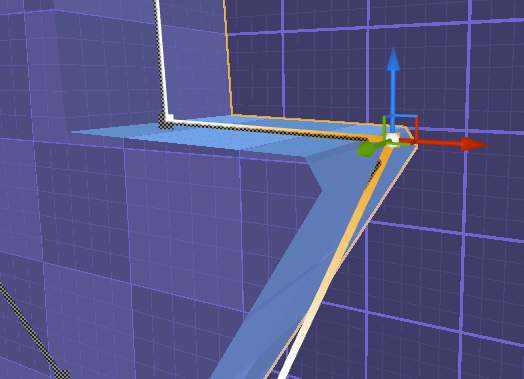
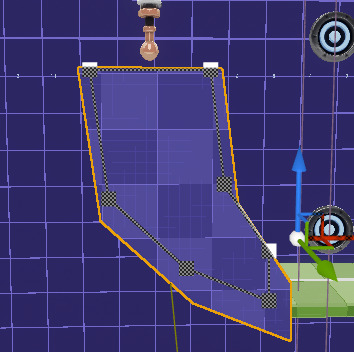
The Level Editor is a set of in-engine tools I built for laying out levels and scripting their logic. Levels are built from collision polygons, spline-based shapes that generate platform geometry in editor and feed their data to the game at runtime to spawn the actual platforms. I used it to build all of the Target Test and Tutorials levels.
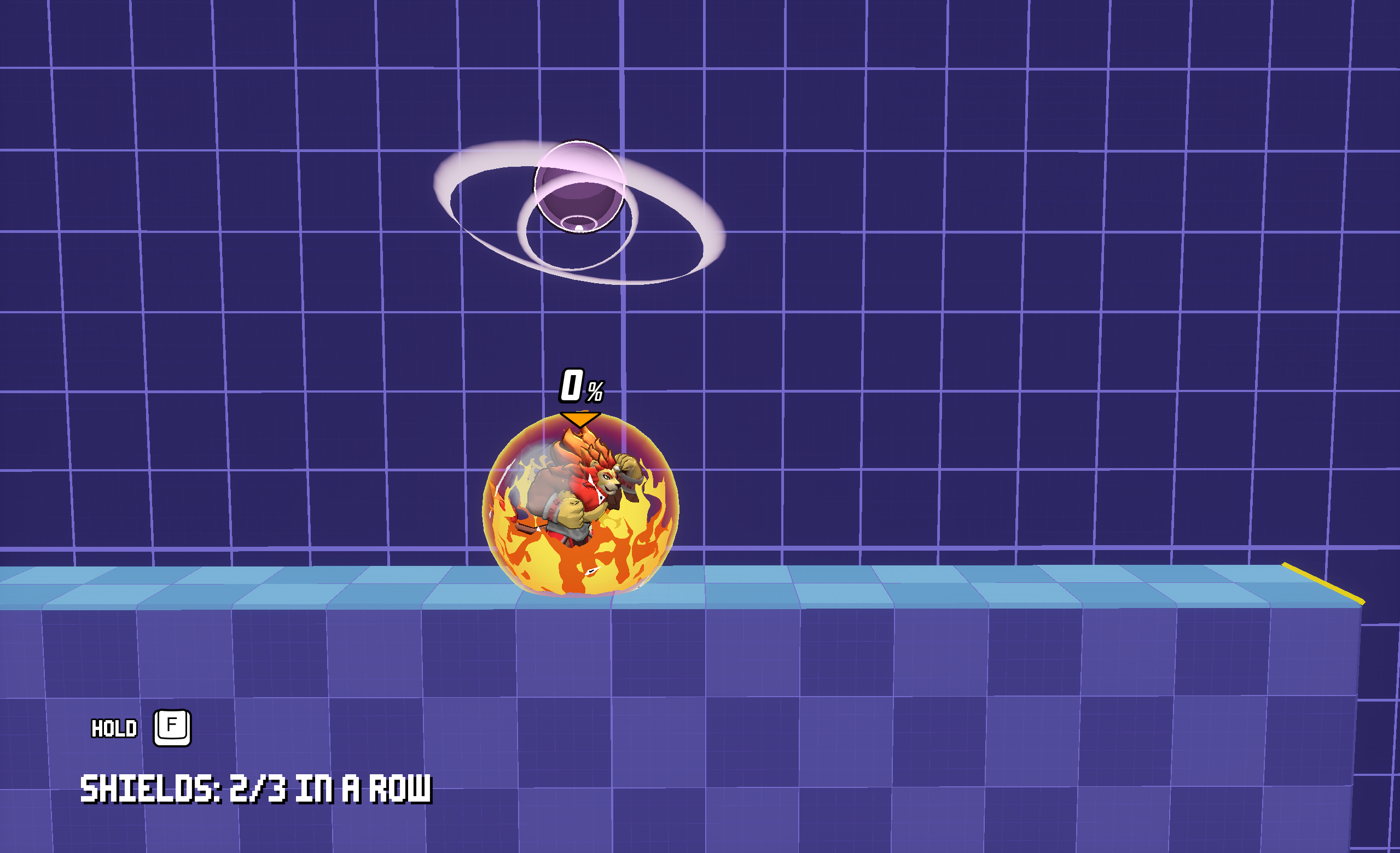
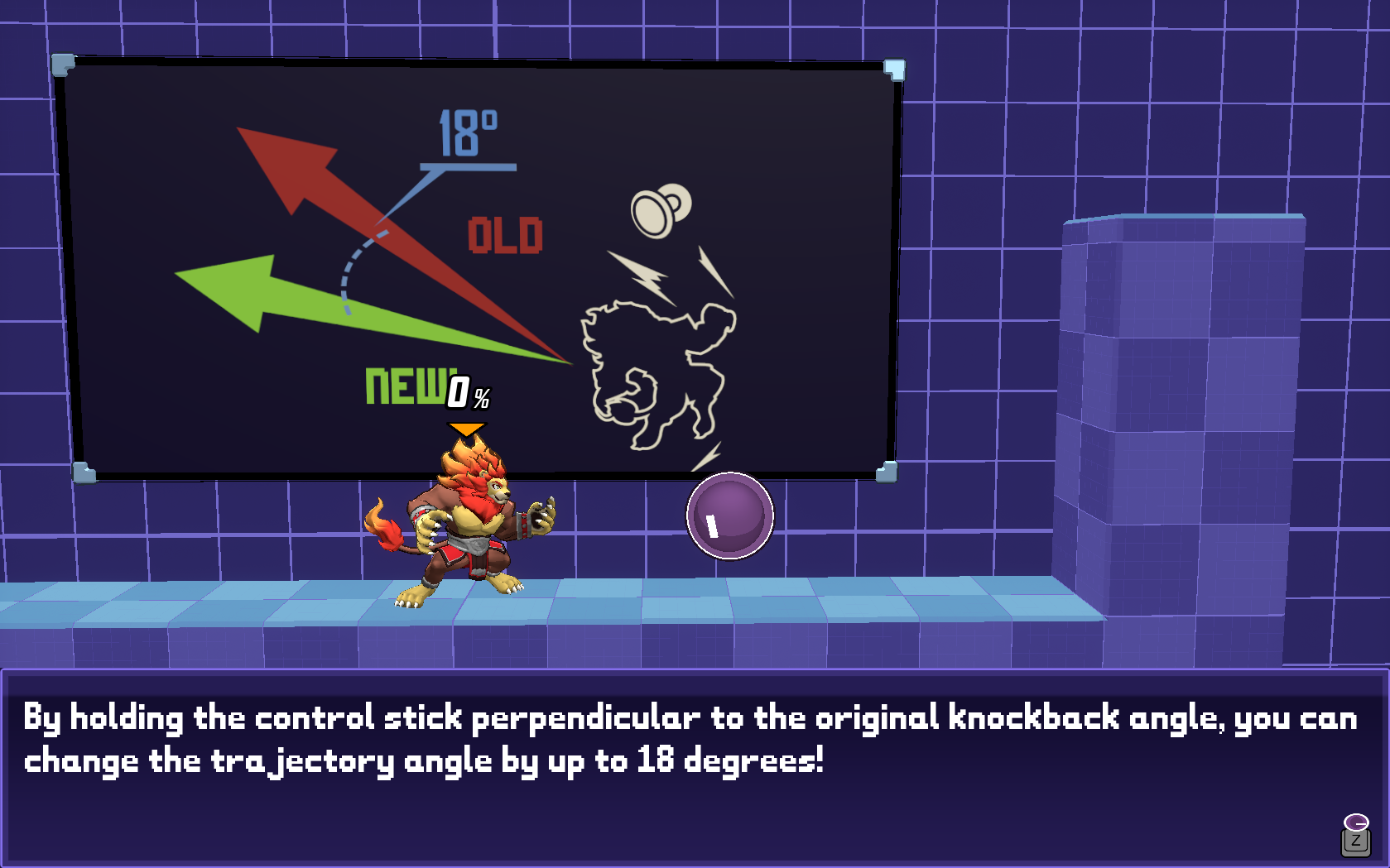
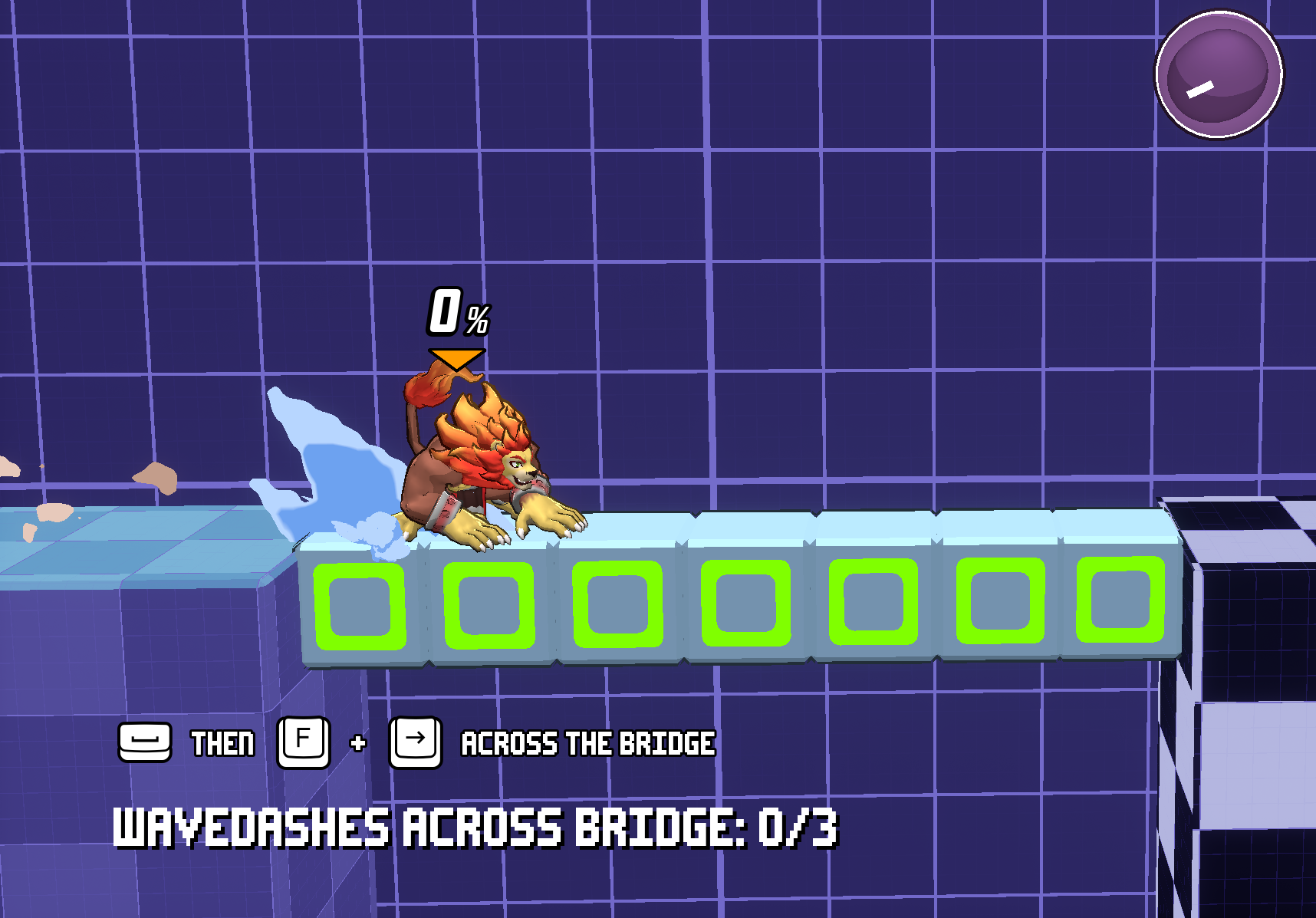
The Tutorials mode is a set of lessons that teach new players how to play, split across beginner, intermediate, and advanced tiers. I designed and built the mode using a custom scripting framework for authoring and sequencing the lessons.
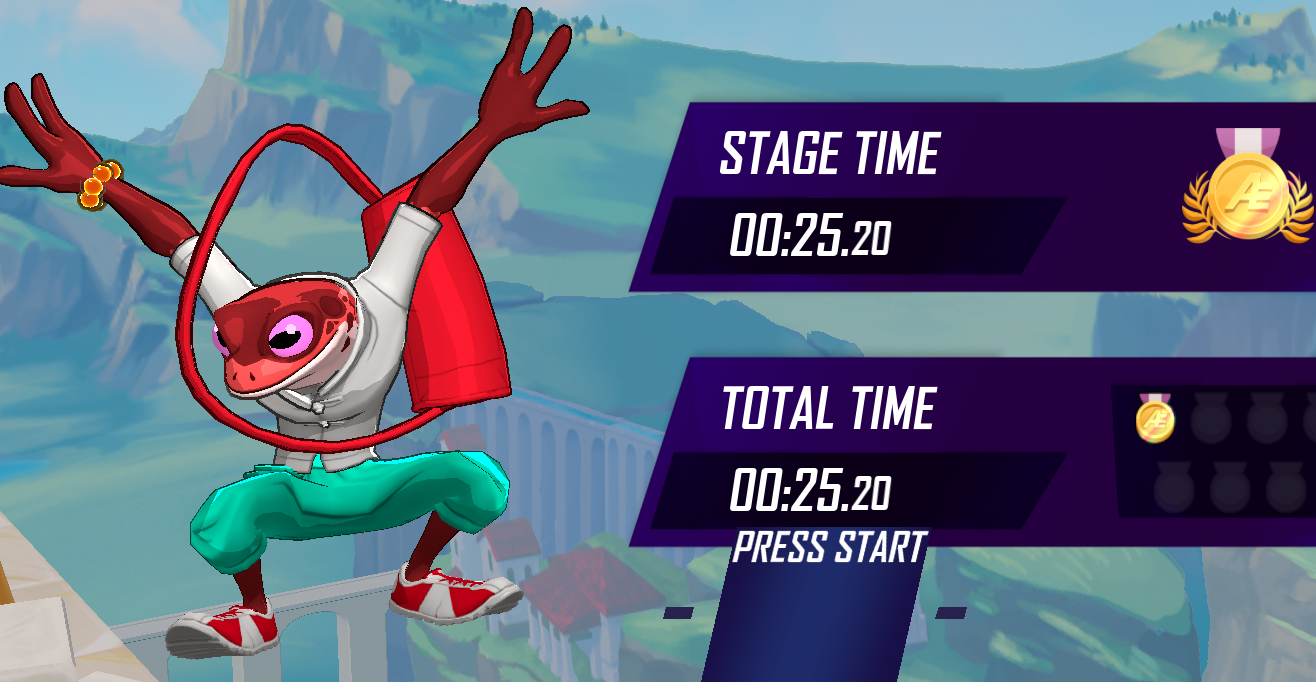
Arcade mode is a single player contest mode where players fight through a series of CPU opponents to ultimately defeat the boss. I was responsible for the Target Test bonus levels, the post-match results screen, the match HUD, and general polish and improvements to help this mode ship for launch.
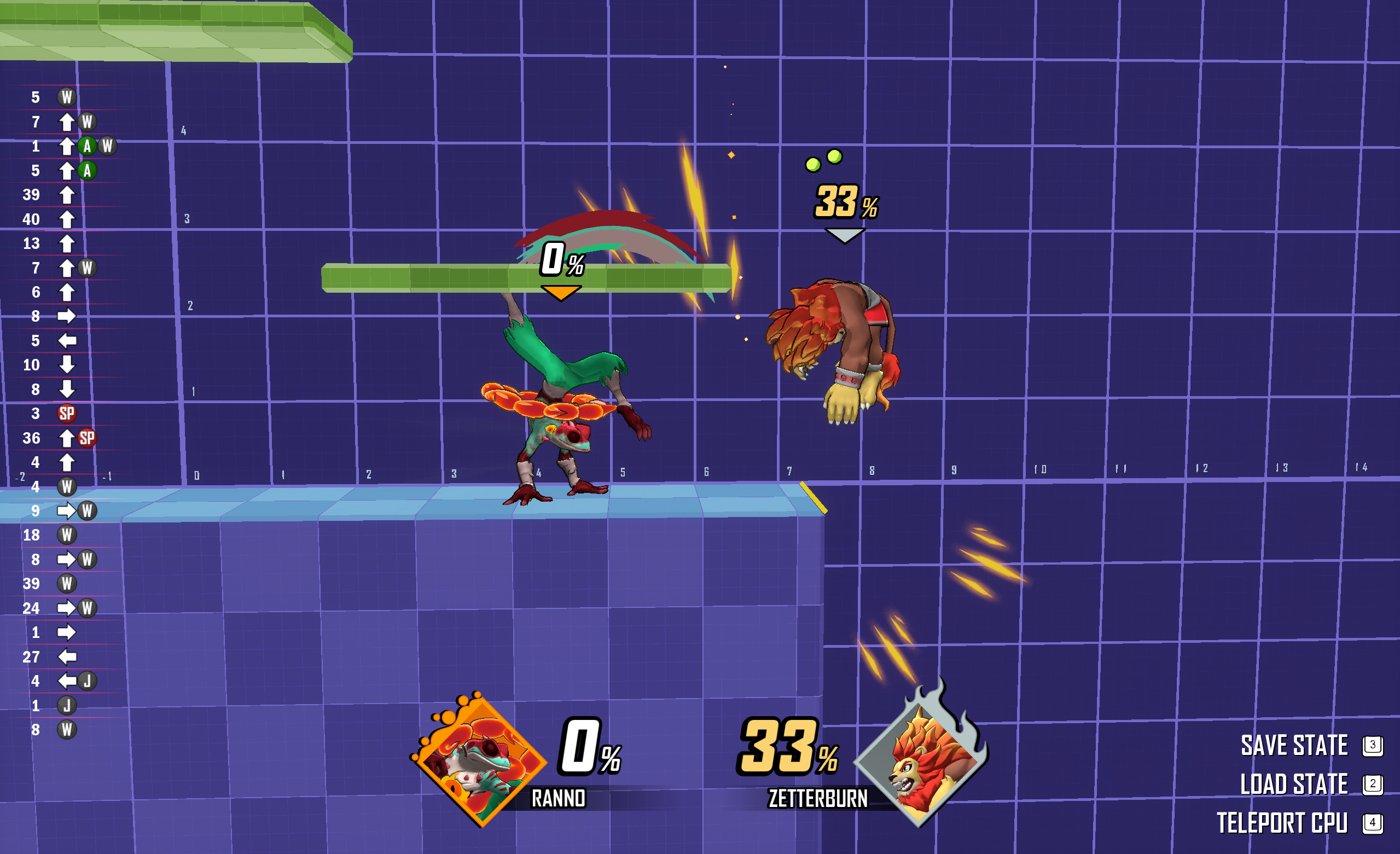
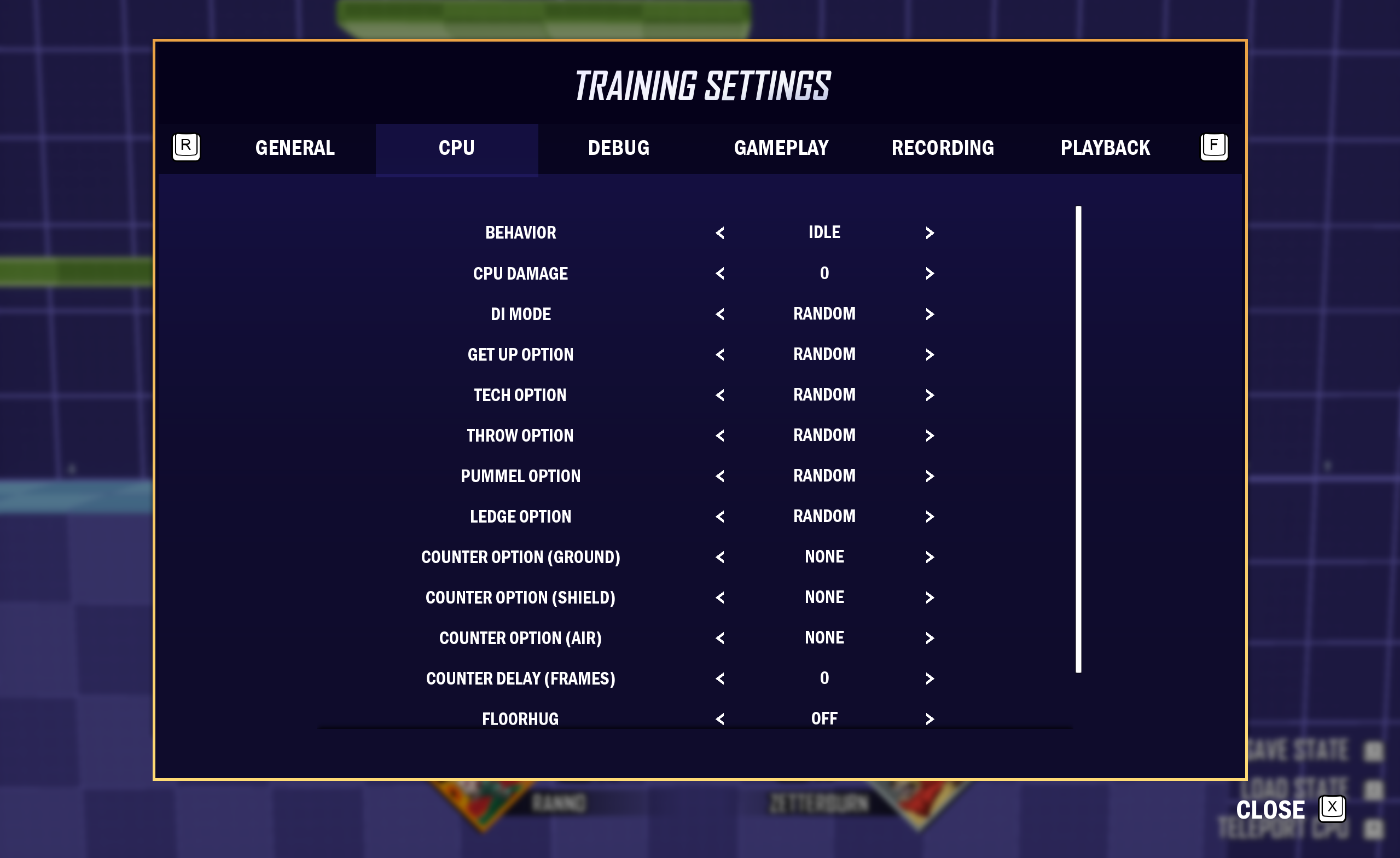
The Training Mode features a wide range of CPU character settings and functionality for practicing in-game scenarios. This was the first game mode I was responsible for on Rivals 2, shipping alongside Arcade Mode for launch. Later on, I shipped an overhaul update that added input recording / playback and various features suggested by the community.
A reaction trainer where eyes appear around the stage and you respond with the correct input before each one disappears.
A tool for drilling edgeguards by spawning a CPU offstage and stopping it from recovering back to the stage.
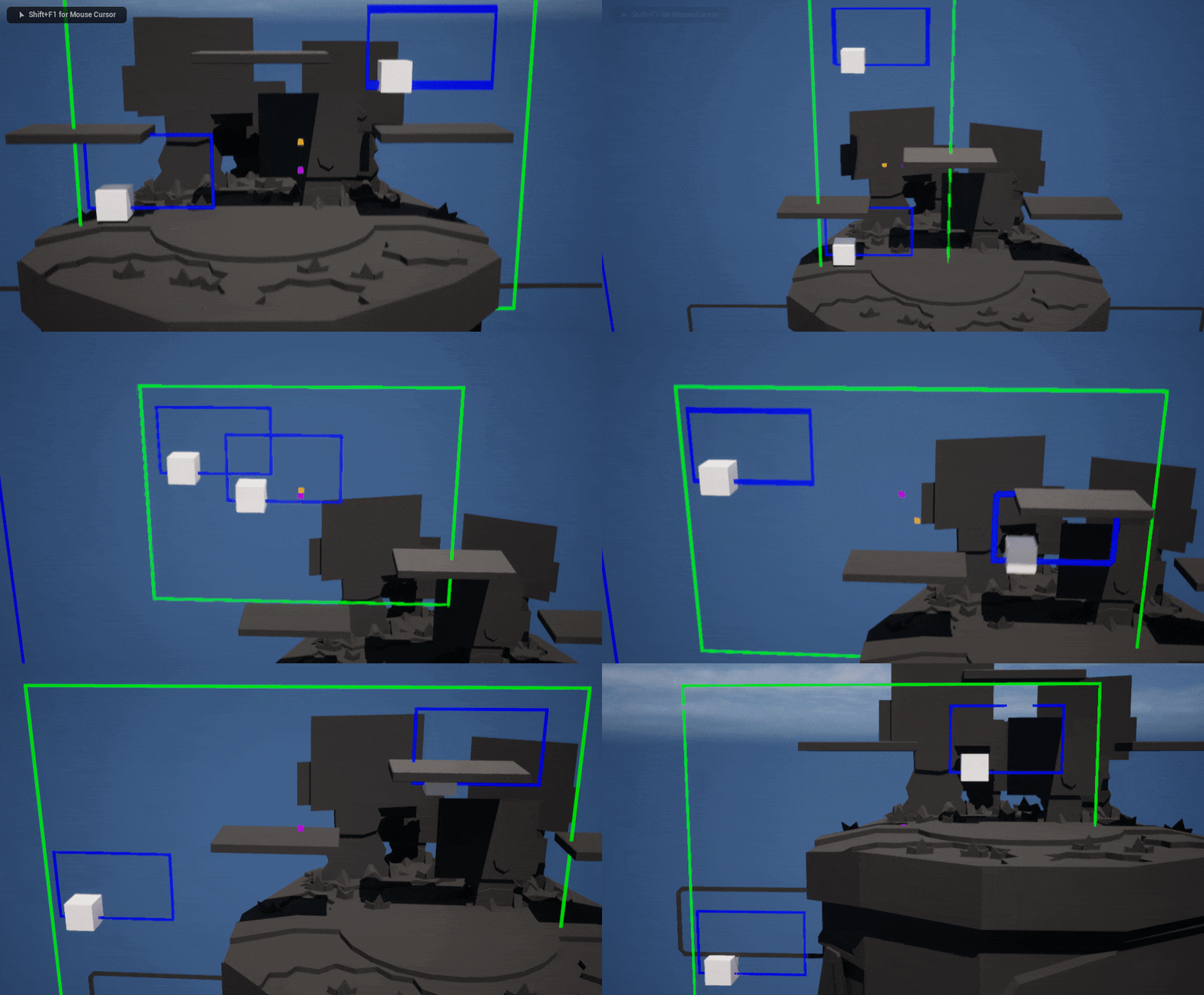
MeleeCameraUE5
is a reverse engineered version of the Super Smash Bros. Melee camera system adapted for Unreal Engine.
The system uses a combination of
rotation, translation along the depth axis, and zooming proportional to the camera's
distance from the stage.
The camera determines it's target 'interest', or the point in space
that the camera should focus on. The interest is calculated based on the
bounding box of the camera subjects. The frustum of the camera will snap to
the bounding box to frame the players effectively.